


Designing the LavinMQ Management Interface
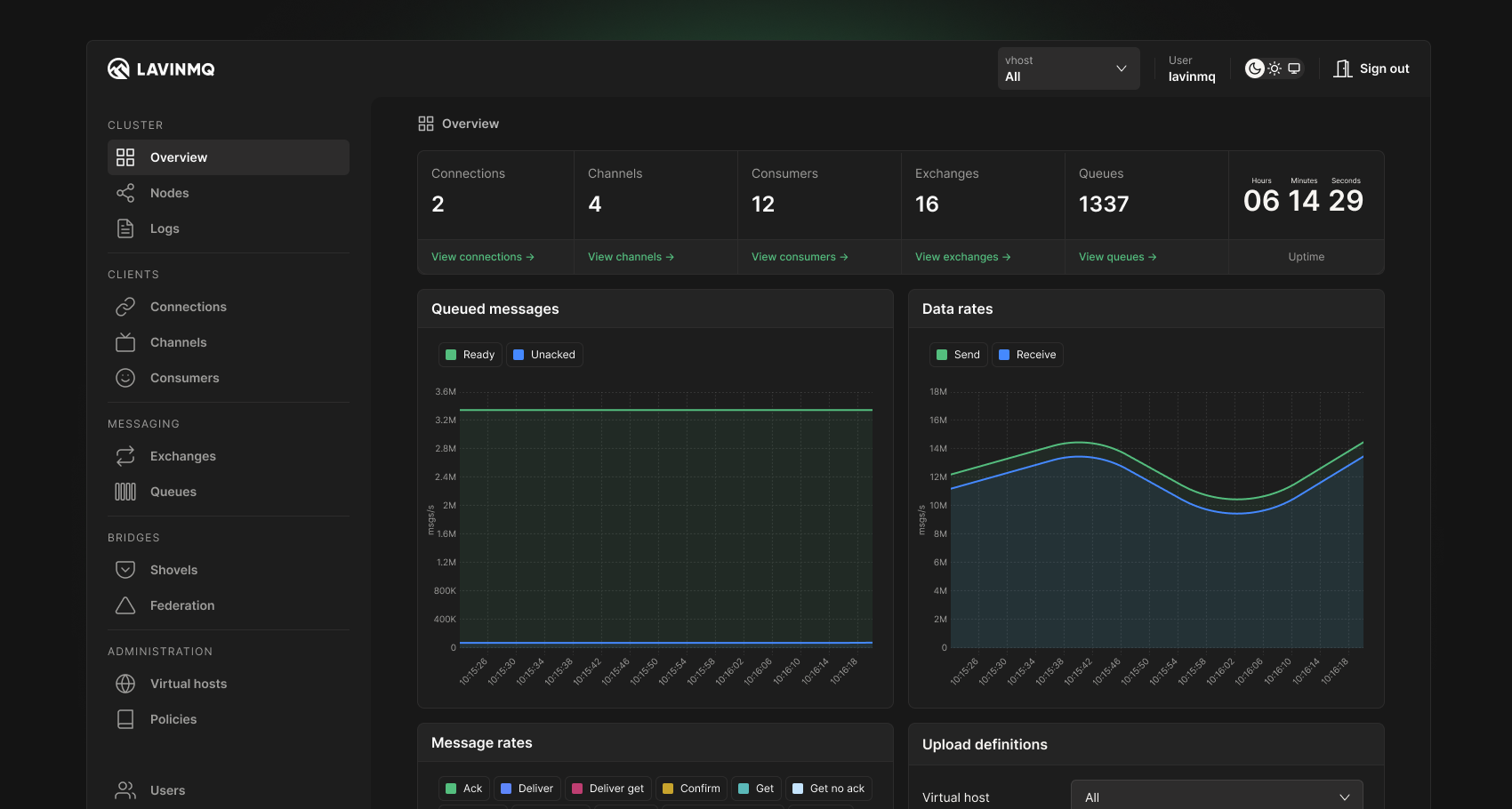
The management interface is often the most visible part of an infrastructure system. While LavinMQ runs behind the scenes, moving messages between services, the management UI is where users go to understand what’s happening, troubleshoot problems, and operate the system. Designing this kind of interface isn’t just about aesthetics. It’s about helping people understand complex systems quickly and act with confidence.
Designing for real use
Most users don’t open a management interface casually. They usually arrive with a specific question: Why are messages piling up in a queue? Are consumers connected and processing messages? Is message throughput increasing or dropping?
Because of this, clarity and speed are essential. The interface should make it easy to understand the system state within seconds.
Visibility matters
In infrastructure tools, hiding complexity can sometimes make things worse. Operators often need access to the underlying details, not just summaries.
Important message broker information should be easy to find, such as:
- Queue sizes
- Message rates
- Consumer activity
- Connection status
- Node health
The goal is simple: users should be able to understand the system at a glance.
Performance is critical
Message systems often run at large scale with thousands of queues and many connections. The management interface needs to remain fast even in these environments.
That means being careful about how data is loaded and displayed. Techniques like pagination, lazy loading, and efficient API calls help keep the interface responsive even in large deployments.
An admin interface should never become the slowest part of the system it monitors.
Designing around workflows
Rather than focusing only on pages, it’s useful to design around common workflows.
For example, finding a queue that is growing unexpectedly, inspecting messages, checking consumer status, or purging messages when needed.
Each of these tasks should be straightforward. The fewer steps required to diagnose and fix an issue, the better the experience will be.
And also administrative tools include operations such as deleting queues or purging messages. These actions should always be clear and intentional.
Always improving
The LavinMQ management interface continues to evolve as we learn from real usage. Feedback, support requests, and real debugging sessions often reveal opportunities to simplify workflows or improve visibility.
Our goal is to keep refining the interface so that it remains fast, clear, and easy to use — even as systems grow more complex. Because the best infrastructure tools are the ones that make complex systems easier to understand and operate.
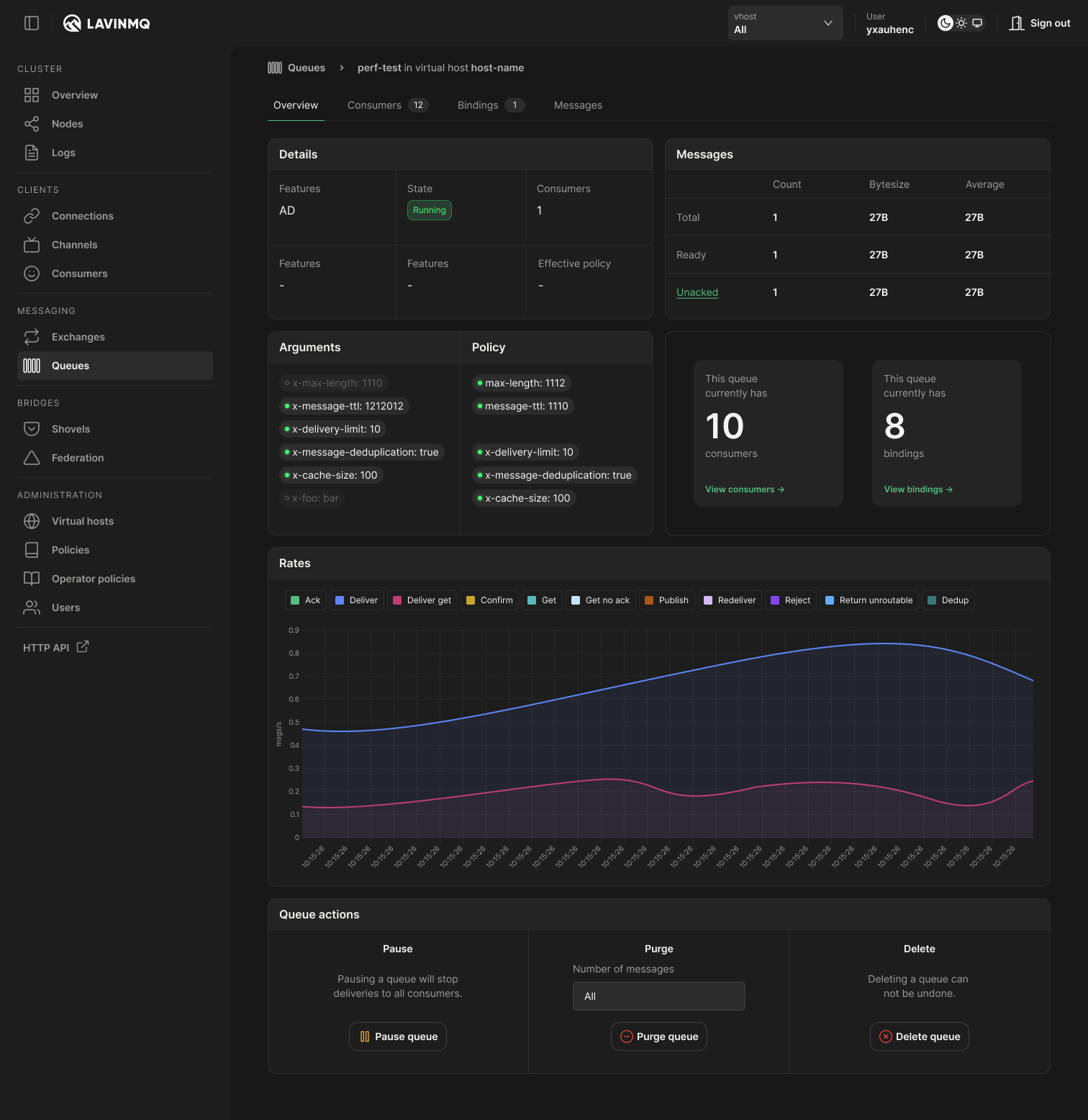 A sneak peek at what’s being worked on.
Magnus Lindberg